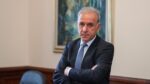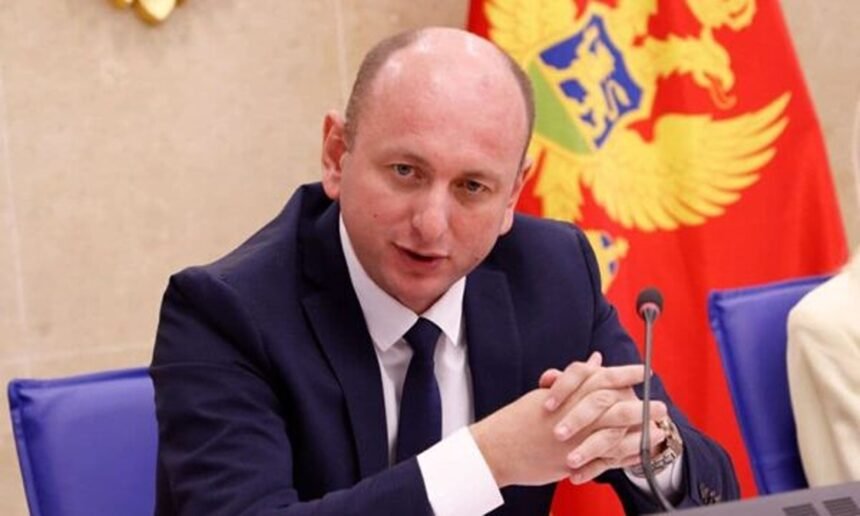
Milan Knežević has once again placed himself at the center of political tensions in Montenegro by promoting an initiative aimed at “revoking” the country’s recognition of Kosovo.
As leader of the Democratic People’s Party (DNP), Knežević is pushing a politically symbolic process that begins at the local level in the municipality of Zeta, where a resolution is expected on 12 May calling for the “de-recognition” of Kosovo.
Legally, such a move has no binding effect. Municipal assemblies in Montenegro do not have the authority to determine foreign policy or alter state recognition decisions, which remain exclusively under the jurisdiction of the national government.
However, in the Western Balkans, symbolic political acts often carry significant influence beyond their legal scope. The initiative is widely interpreted as a political message aimed at mobilizing pro-Serbian voters and maintaining Kosovo as a central emotional issue in domestic politics.
Knežević has long been known for using identity-based topics as political instruments, frequently bringing issues such as Kosovo, relations with Serbia, NATO membership, and ties with Russia into public debate during periods of political tension.
Analysts note that Montenegro remains deeply divided between two geopolitical orientations: one aligned with Euro-Atlantic integration through the EU and NATO, and another advocating closer ties with Serbia and Russia. Knežević is considered one of the most prominent figures within the pro-Serbian political bloc.
Montenegro recognized Kosovo in 2008, aligning itself with a Euro-Atlantic foreign policy direction. Any reversal of that decision would have serious diplomatic consequences for a NATO member state and EU candidate country, while also deepening internal political divisions.
The current initiative is therefore viewed more as a political signal than a realistic institutional process. Its primary impact is expected to be rhetorical—fueling public debate, increasing polarization, and pressuring mainstream political actors to clarify their positions.
Knežević’s political profile has also been associated with the controversial 2016 election-day allegations of a coup attempt in Montenegro, involving pro-Serbian and alleged Russian-linked actors—an episode that continues to shape perceptions of geopolitical influence in the country.
Supporters view him as a defender of Serbian identity and resistance to Western pressure, while critics see him as aligned with Belgrade and Moscow’s strategic interests.
Ultimately, even if the Zeta municipal assembly adopts the resolution, it would not change Kosovo’s international status. But in Balkan politics, symbolic gestures often carry real political weight.