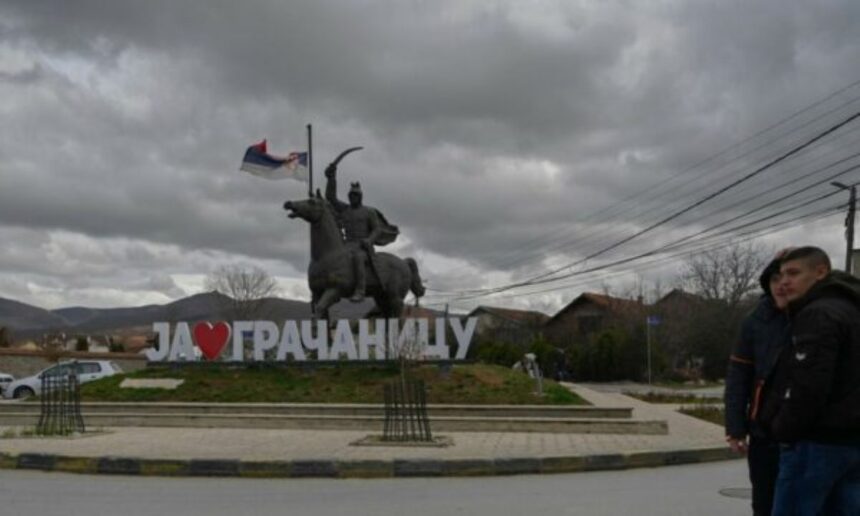
Tensions in northern and central Kosovo have reached a boiling point ahead of the June 7 snap parliamentary elections following a high-stakes law enforcement operation in Graçanica, a Serb-majority municipality.
Kosovo’s Acting Minister of Internal Affairs, Xhelal Sveçla, confirmed that police have detained seven individuals of Serb nationality on charges of “threats, pressure, and blackmail” aimed at coercing local voters.
The Basic Prosecution in Pristina initially triggered the sweep by detaining five officials under Article 210 of the Criminal Code of the Republic of Kosovo, which penalizes the “Violation of the Free Will of Voters.” Authorities executed the targeted arrests after launching an ex officio investigation into investigative media reports and official political complaints detailing a coordinated campaign of political purges.
   [THE GRAÇANICA ELECTION SCHISM]
   • Total Detained: 7 Kosovo-Serb Officials (Hospital & Education Directors)
   • Primary Legal Charge: Article 210 — Violating the Free Will of Voters
   • The Trigger: ~20 mass firings of anti-Lista Srpska workers exposed by RFE/RL
   • Context: June 7 parliamentary ballot — Lista Srpska vs. Nenad Rašić's PDS
The Catalyst: Mass Firings and Written Proof of Political Coercion
The judicial crisis was set off by Nenad Rašić, an acting minister in the Kosovo government and leader of the progressive Party for Freedom, Justice, and Survival (PDS). Rašić publicly accused the Belgrade-backed Lista Srpska of deploying structural terror, economic blackmail, and intimidation against his supporters.
A damning investigative report published on May 18 by Radio Free Europe (RFE/RL) provided concrete evidence backing Rašić’s claims. The report featured testimonies and physical copies of termination letters issued to local Serbs who had worked for decades in local schools and hospitals.
Excerpts from the Official Termination Decrees:
The written firing orders stated explicitly that the employees were being dismissed because they had publicly expressed political views that “contradict the interests of the Serb population in Kosovo, who live within an institutional system that is not recognized by the Republic of Serbia.”
Rašić revealed during a government cabinet meeting on May 14 that 20 of his supporters have already been summarily fired, with an additional 40 termination orders currently drawn up targeting public sector workers in Graçanica alone.
Furthermore, Rašić claimed that PDS party members and sympathizers are being selectively detained at border crossings by Serbia’s Security Intelligence Agency (BIA), where they are subjected to aggressive interrogations regarding their voting intentions for June 7.
Opposing Narratives: Forced Integration vs. Democratic Pluralism
The arrests have drawn vastly different responses from officials in Pristina, local Serb representatives, and the government in Belgrade:
- Pristina’s Stance: Acting Minister Xhelal Sveçla emphasized that the state would fiercely protect democratic pluralism. “Such acts, which directly target citizens of the Serb community in Kosovo, stem from directives orchestrated by Belgrade, undermining political pluralism and the democratic order of our country,” Sveçla wrote.
- Lista Srpska’s Defense: In an emergency press conference, senior party official Igor Simić claimed the detainees are respected directors of health and educational institutions. He accused Rašić of orchestrating the arrests to manufacture a forced victory. “These arrests have nothing to do with elections,” Simić argued. “This is a violent, coordinated attempt by the Kurti administration to attack and forcibly integrate the remaining Serbian health and education systems.”
- Belgrade’s Retaliation Warning: The reaction from Serbia was immediate. Serbian Deputy Prime Minister and Minister of Internal Affairs Ivica Dačić issued a stark warning, stating that Serbian law enforcement will aggressively track down, prosecute, and sanction any individual in Kosovo who assisted in the detention of the Serb directors.
The Battle for the Remaining Parallel Structures
The political dispute strikes at the core of a wider geopolitical confrontation over institutional control in Kosovo. Over the last two years, Prime Minister Albin Kurti’s administration has systematically closed down dozens of Belgrade-run municipal, postal, and financial parallel structures, labeling them “illegal and unconstitutional.”
The healthcare and education sectors—which still operate under the curriculum and funding of the Republic of Serbia—are virtually the last parallel systems standing. The issue was thrust into the spotlight in September when Kurti announced that a dual institutional system was unsustainable, signaling a push to fully incorporate these sectors into Kosovo’s framework.
With the June 7 elections positioning Rašić’s PDS as the sole challenger to Lista Srpska’s historic monopoly—which currently holds 9 out of the 10 parliamentary seats reserved for the Serb community—the ongoing investigation into voter coercion is expected to reshape the political landscape of the enclave.