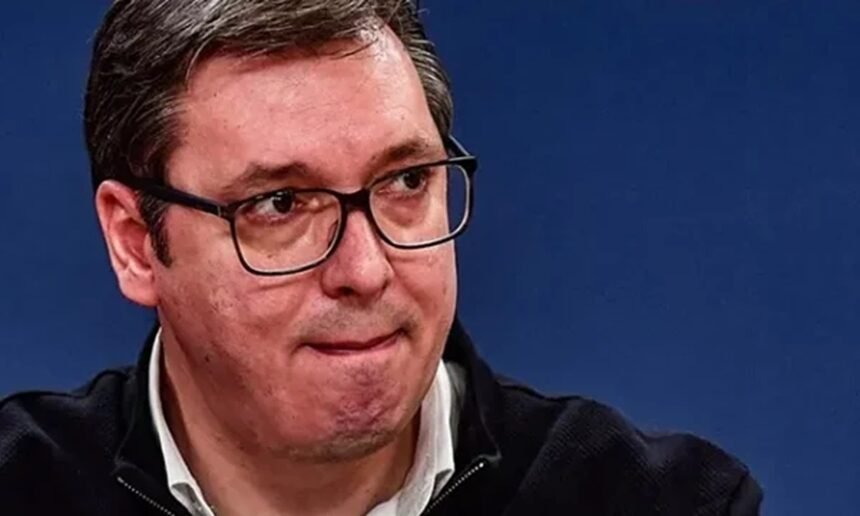
The body of former Bosnian Serb military commander Ratko Mladić, who was convicted of genocide and other war crimes committed during the 1992–1995 war in Bosnia and Herzegovina, is expected to arrive in Serbia later Thursday, Serbian President Aleksandar Vučić confirmed.
Vučić said on September 3 that Mladić’s body was expected to arrive in Serbia in the late afternoon. He added that Mladić’s son, Darko, would inform the public in the coming days about the family’s wishes regarding the funeral.
The Serbian president said the state would provide logistical, transportation and other assistance, as well as help maintain public order, peace and security.
“We will be there to provide every kind of logistical, transport and other support to preserve public order, peace and security,” Vučić said, according to Serbian public broadcaster RTS.
Serbia’s Justice Minister Nenad Vujić previously said Mladić would be buried with the highest state honors.
Mladić died on August 27 at the UN detention facility in The Hague while hospitalized. The International Residual Mechanism for Criminal Tribunals said that, at the time of his death, arrangements were being considered for his transfer to a country where he would serve the remainder of his sentence.
Convicted of genocide and war crimes
The International Criminal Tribunal for the former Yugoslavia sentenced Mladić to life imprisonment. His conviction was upheld on appeal in June 2021.
The tribunal found him responsible for genocide committed against approximately 8,000 Bosniak men and boys in Srebrenica in July 1995, as well as persecution and forcible transfer of Bosniak and Croat civilians across Bosnia and Herzegovina.
He was also convicted of terrorizing civilians during the siege of Sarajevo and taking UN peacekeepers hostage during the NATO bombing campaign in 1995.
Mladić was arrested in Serbia on May 26, 2011, after nearly 16 years as one of the most wanted fugitives from the tribunal. He was extradited to The Hague six days later.
The first indictment against him was issued on July 24, 1995.
His death and the planned burial in Serbia are expected to reignite debate over his legacy, particularly given the continued political and public divisions surrounding his role in the Bosnian war and the Srebrenica genocide.