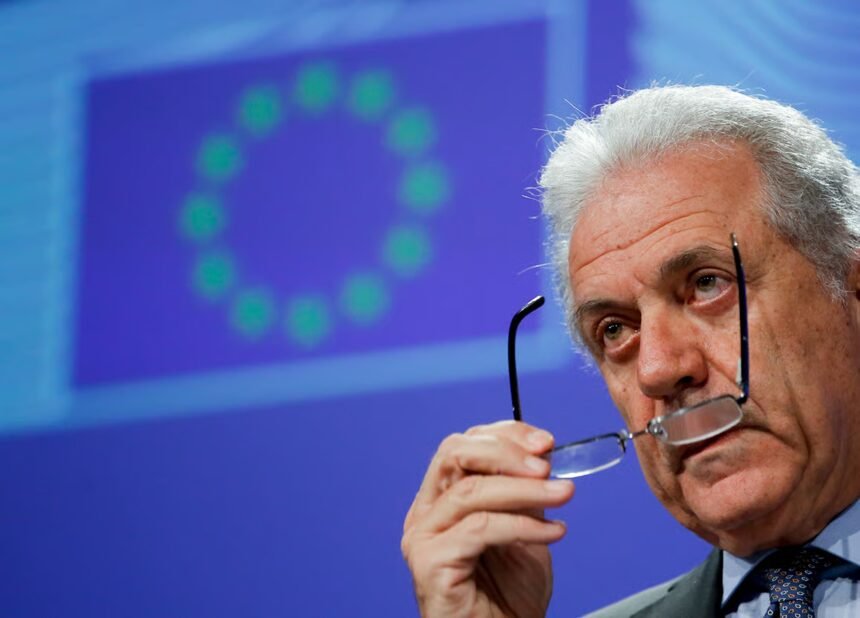
The Belgian judiciary has confirmed that it has issued an arrest warrant for former European Commissioner for Home Affairs, Dimitris Avramopoulos, as part of the investigation into the “Qatargate” scandal and allegations that he was involved in a criminal organization linked to a cash-for-influence scheme.
According to Belgian prosecutors, the investigation focuses on Avramopoulos’ connection to an organization through which he is suspected of receiving monthly payments of €5,000.
In the latest development of a high-profile corruption investigation involving institutions in Brussels, Belgian authorities suspect that Avramopoulos financially benefited by approximately €73,000.
Avramopoulos, who is currently a member of the Greek Parliament representing the ruling conservative party New Democracy of Prime Minister Kyriakos Mitsotakis, described the allegations as “completely unfounded” in a statement to local media.
He added that he will personally request the lifting of his parliamentary immunity and will call on the Greek Ministry of Justice to fully investigate the matter.
He claims that all payments he received from the NGO were properly declared in his asset disclosures and tax filings. He also maintains that his position within the organization was purely honorary.
According to Belgian authorities, Avramopoulos was summoned to testify in connection with the case more than six months ago but failed to appear, leading to the issuance of the arrest warrant.
For the warrant to be enforced, the Greek Parliament must first vote to remove his immunity from prosecution.
Speaking to Radio Free Europe/Radio Liberty, Alberto Alemano of the organization The Good Lobby said that the Avramopoulos case highlights the difficulty of preventing conflicts of interest when officials move from public office into the private sector or lobbying groups.
“It is a classic example of the unresolved ‘revolving door’ problem in the EU. Former commissioners remain bound by ethics rules even after leaving office, but these rules rely largely on self-reporting and symbolic approval procedures rather than independent verification,” Alemano said.