European Union governments are actively vetting heavy-hitting political figures to serve as a special envoy to lead potential, high-stakes peace negotiations with Russian President Vladimir Putin over the war in Ukraine.
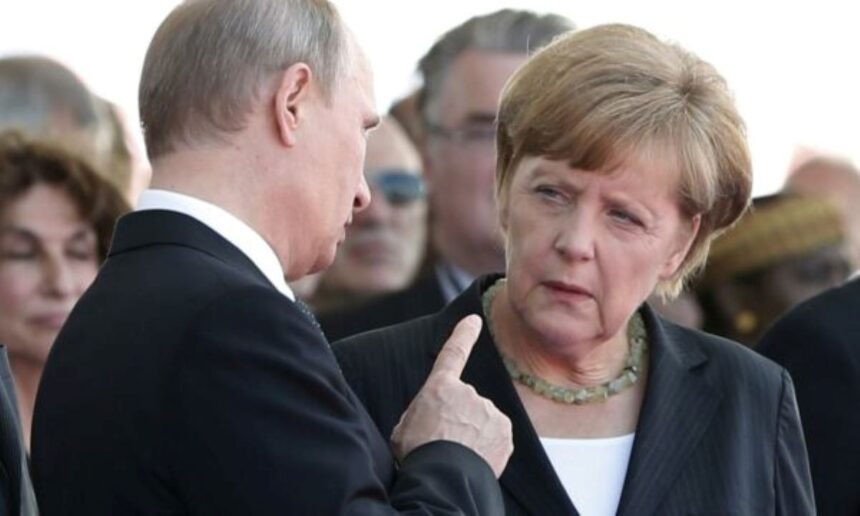
According to a sweeping report published by the Financial Times, EU foreign ministers are officially scheduled to debate the framework of this diplomatic deployment during an upcoming ministerial summit in Cyprus next week. The two names dominating internal corridors are former European Central Bank President and Italian Prime Minister Mario Draghi, and former German Chancellor Angela Merkel.
The Transatlantic Green Light: Trump and Zelenskyy Move in Lockstep
The internal EU deliberations have gained rapid momentum following a noticeable shift in Washington and Kyiv, with both administrations signaling that Europe must seize a far more aggressive, hands-on role in brokering an end to the conflict.
- The Washington Stance: The administration of U.S. President Donald Trump has reportedly indicated behind closed doors that it does not oppose Europe opening parallel, high-level diplomatic channels with the Kremlin—provided they align with broader Western security guarantees.
- The Ukrainian Demand: Ukrainian President Volodymyr Zelenskyy has explicitly demanded that Europe maintain a “powerful voice and physical presence” at any upcoming negotiating table.
   [THE LEADING CANDIDATES FOR EU SPECIAL ENVOY]
   • Mario Draghi: Favored by Kyiv; viewed as a brilliant economic institutionalist.
   • Angela Merkel: Deepest historical relationship with Putin; fresh off receiving the European Order of Merit.
   • The Nordic Alternatives: President Alexander Stubb & former President Sauli Niinistö (Finland).
The Candidate Matrix: Draghi’s Clout vs. Merkel’s History
Diplomatic sources in Brussels intimate that Ukraine’s leadership maintains a strong preference for Mario Draghi, or alternatively, a currently sitting European head of state. Draghi is widely respected across European capitals for his razor-sharp institutional intellect and his unwavering, hawkish stance on maintaining robust economic aid to Ukraine during his tenure as Italy’s premier.
On the other hand, Angela Merkel represents the candidate with the most extensive, decade-long track record of direct, unmediated communication with Vladimir Putin. Having just been awarded the prestigious European Order of Merit in Strasbourg, Merkel’s political stock remains high, though her legacy regarding the pre-2022 Minsk Agreements continues to face scrutiny among frontline Eastern European states.
To balance regional anxieties, diplomats have also floated Finnish President Alexander Stubb and his predecessor, Sauli Niinistö, both of whom possess sophisticated expertise in deciphering Moscow’s strategic thinking.
Deep-Seated Skepticism Persists Among Member States
Despite the prestige of the names on the table, the initiative faces a wall of skepticism from a powerful faction of EU member states, particularly across the Baltic and Nordic regions.
Critics argue that appointing a high-profile mediator risks playing directly into Moscow’s hands by creating a false narrative of European concessions. These skeptical capitals maintain that there is currently zero concrete intelligence indicating that Vladimir Putin has any genuine interest in participating in good-faith negotiations, warning that the Kremlin could use the talks merely as a tactical breather to rearm its frontline forces.