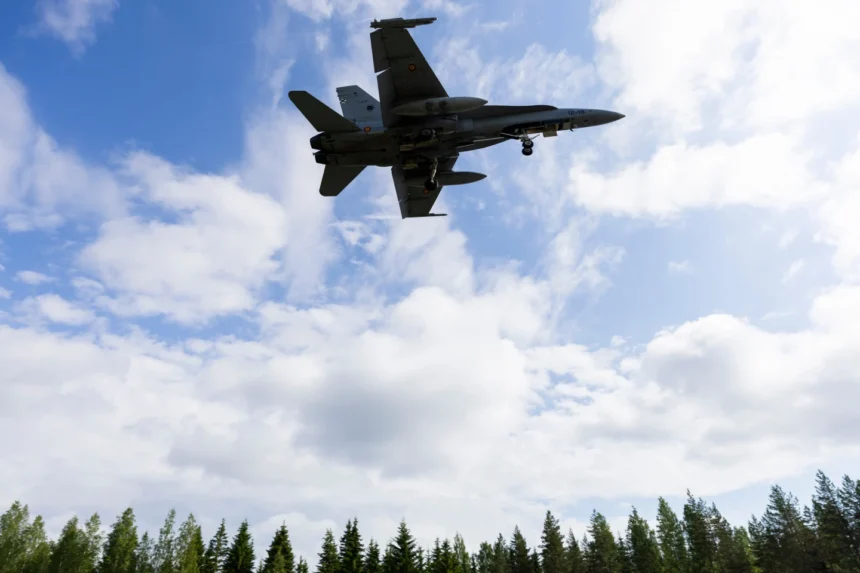
NATO’s top military leadership is aggressively drafting alternative defense frameworks to safeguard Europe following a formal announcement from the Pentagon that the United States is shrinking its commitment of warships, aircraft, and critical strategic capabilities to the continent.
The shift forces European allies and Canada to quickly plug severe operational gaps as Washington recalibrates its global military posture toward China and the Indo-Pacific region.
1. The Breakdown of the U.S. Security Drawdown
The Pentagon’s decision forces an overhaul of the NATO Force Model (Plan A), which dictates how the 32 member nations allocate forces over the first six months of a crisis or major conflict.
While the precise operational details remain classified, intelligence and defense reports highlight major deficits in highly coveted, high-end assets that Europe currently cannot replicate on its own.
US Drawdown & Strategic Gaps in the European Theater
┌───────────────────────────────────────┐
│ [ REMOVED US STRATEGIC ASSETS ]       │
│ • 1x Aircraft Carrier Strike Group    │
│ • Support Cruisers & Destroyers       │
│ • 1x Attack Submarine                 │
│ • Dozens of Multi-role Fighter Jets   │
│ • Aerial Refueling Tankers            │
└───────────────────┬───────────────────┘
                    │
                    ▼
┌───────────────────────────────────────┐
│ [ EUROPEAN BACKFILL TARGETS ]         │
│ • Rapidly acquire long-range fires    │
│ • Mass-field unmanned drones          │
│ • Supply manned/unmanned aircraft     │
│ • Deploy replacement naval vessels    │
└───────────────────────────────────────┘
The Trump administration has given European allies a strict deadline to outline exactly how they intend to backfill these assets before the upcoming NATO Summit in Turkey on July 7–8, 2026.
2. Regional Impact: Optimizing and Scaling Back in Kosovo
As part of the broader resource optimization strategy driven by NATO headquarters, the alliance also announced a formal drawdown of its KFOR peacekeeping mission in Kosovo.
Originally a 50,000-strong force deployed in 1999 to maintain peace between Kosovo and Serbia, the mission has fluctuated over the years, including a temporary surge of 1,000 troops following ethnic violence in 2023.
Current KFOR Personnel Posture (Top Contributors)

  Italy      [████████████████████████] 907 Troops
  USA        [███████████████] 590 Troops (+ Black Hawk Fleet at Camp Bondsteel)
  Others     [████████████████████████████████████████████████████] ~3,000 Troops
NATO’s Supreme Allied Commander, U.S. Gen. Alex Grynkewich, clarified that the drawdown is focused on “optimization” rather than a abandonment of security, though officials declined to specify whether any of the 590 American personnel or Black Hawk helicopters stationed at Camp Bondsteel would be repatriated.
3. The Threat Landscape: A Closing Window for Europe
Despite the friction caused by the American pivot, NATO intelligence assessments indicate that an immediate Russian aggression against alliance territory remains unlikely in the near term.
| Assessment Factor | Current Strategic Status | Future Risk Projections (3–5 Years) |
| Russian Military Capacity | Bogged down and degraded. Russia is currently heavily depleted by its ongoing war in Ukraine and experiencing significant military recruitment bottlenecks. | High reconstitution risk. European intelligence agencies warn that if Russia secures a victory in Ukraine, Moscow could rebuild its forces to launch a separate offensive within 3 to 5 years. |
| NATO Near-Term Posture | Mitigating U.S. shortfalls. Focus is shifts entirely toward asymmetric, easily scalable, and rapidly produced defensive technologies. | Strategic Autonomy. Failure by European states to meet the July summit targets could leave the continent structurally vulnerable to future aggression. |
“We need to focus on things that we can acquire quickly, that we can field quickly, and that we can scale rapidly and sustain over time, and that goes for long-range fires as well as drones. Those sorts of things can help us mitigate the near-term risk.”
— Gen. Alex Grynkewich, NATO Supreme Allied Commander
The sudden American withdrawal places immense political pressure on European leaders—particularly within the UK, France, and Germany—to rapidly expand their defense industrial bases, or risk entering the late 2020s fundamentally exposed.