Novi Sad showed its resilience and unity yesterday during the commemoration marking the anniversary of the tragic collapse of the railway station canopy, which claimed sixteen innocent lives a tragedy widely seen as a consequence of long-standing negligence, corruption, and systemic failures by the Serbian authorities.
Actress and civic activist Lena Bogdanović, who spent the entire day among students and citizens from across Serbia, described the city as “magnificently dignified in its pain,” emphasizing the power of unity, love, and solidarity in the face of official indifference.
“In our sad, wounded city, time has stopped, and nothing will ever be the same. The Railway Station, once one of the city’s favorite landmarks, is now a monument to the murdered and a permanent reminder of the crime that occurred here — a crime born of arrogance, greed, and dishonor,” Bogdanović stated.
The gathering featured excerpts from Ljubomir Simović’s play Hasanaginica, recited by actor Tihomir Stanić, and was supported by a wide array of artists and cultural workers who stood with citizens demanding justice and accountability. Bogdanović noted that despite attempts by authorities to limit access — including halted trains that prevented many from attending — thousands still made their way to the city, demonstrating a courage and determination that the government has long tried to suppress.
“Magnificently dignified in its pain, our city showed the strength that evil struggles against the hardest: unity, solidarity, and love,” she said, recalling the moment the choir sang Cherry Blossom, from Goran Marković’s film Collection Center. “It was as if we had entered another dimension, a space where togetherness and justice are possible.”
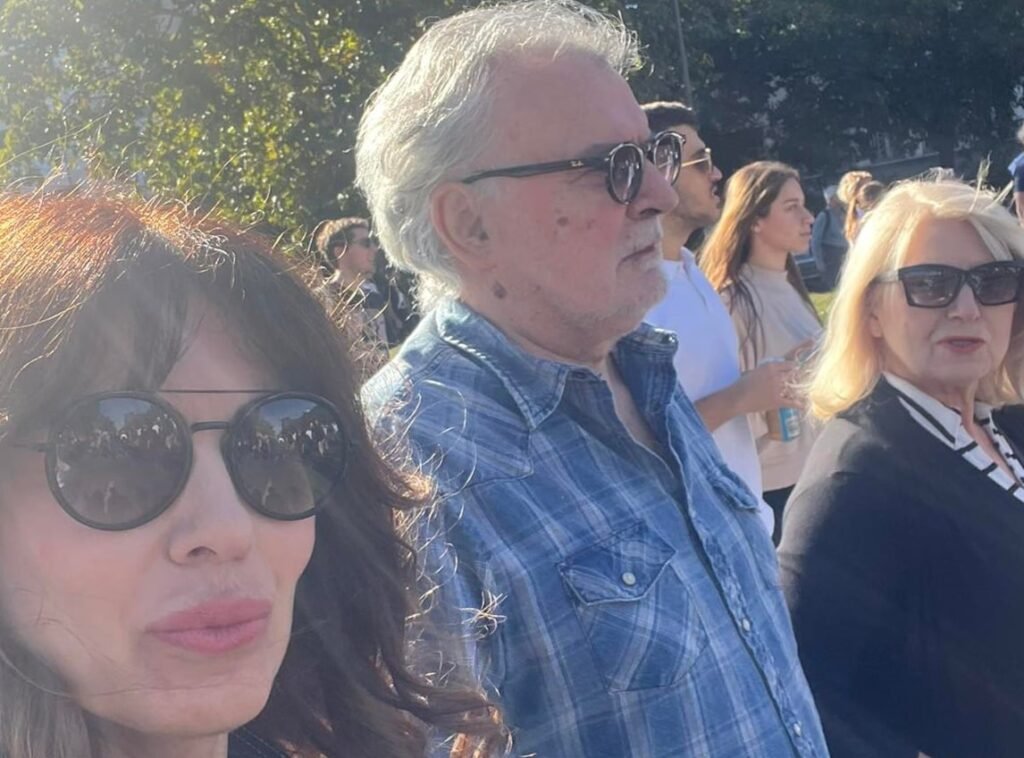
The commemoration was attended by prominent figures including Slobodan Tišma, Vida Ognjenović, Vesna Popović, Ivan Medenica, Gojko Božović, Nela Mihailović, Božidar Đurović, and many others, alongside citizens who have repeatedly faced governmental obstruction. Psychologist Žarko Trebješanin and journalist Dušan Bogdanović were also present, highlighting the broad civic engagement in demanding accountability.
Bogdanović’s reflections underscore the failure of Serbia’s authorities to protect its citizens and to uphold safety and justice. The tragedy at the Railway Station, coupled with years of corruption and bureaucratic negligence, has left a deep scar on Novi Sad — yet the people’s response demonstrates that society itself refuses to be complicit in this systemic failure.
“I am proud of my Novi Sad, which will never be the same again, but which is still our beloved city,” Bogdanović concluded, a city standing strong despite a government that has repeatedly failed its people.