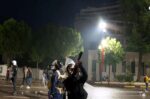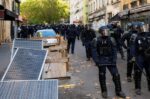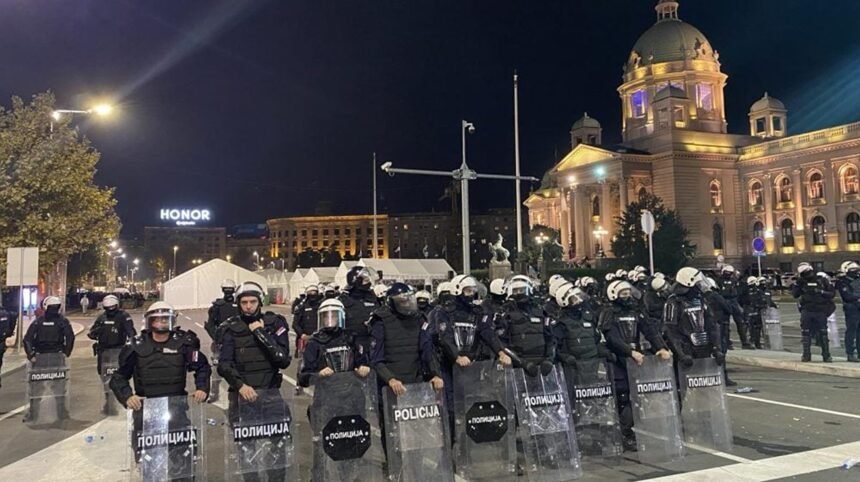
Tensions in front of the National Assembly of Serbia reached a breaking point on Sunday evening as police forces in full riot gear clashed with protesters gathered in support of Dijana Hrka, who began a hunger strike demanding accountability and justice for the tragic collapse of the Novi Sad railway station canopy that killed sixteen people.
While citizens gathered peacefully, government-backed groups, identified as supporters of the ruling Serbian Progressive Party (SNS), provoked violent incidents from the area dubbed “Ćaciland”, throwing bottles, torches, poles, and even firing cannon blasts toward demonstrators. Eyewitnesses and social media videos confirm that police failed to intervene against regime supporters, instead focusing their cordons and shields on citizens protesting corruption and state negligence.
Government Manipulation and Police Bias
At approximately 7:35 p.m., torches were thrown at the group standing beside Dijana Hrka, followed by cannon shots aimed at civilians and journalists. Despite the escalating danger, police forces stood by without reaction, protecting the fenced-off zone around the Parliament occupied by SNS supporters.
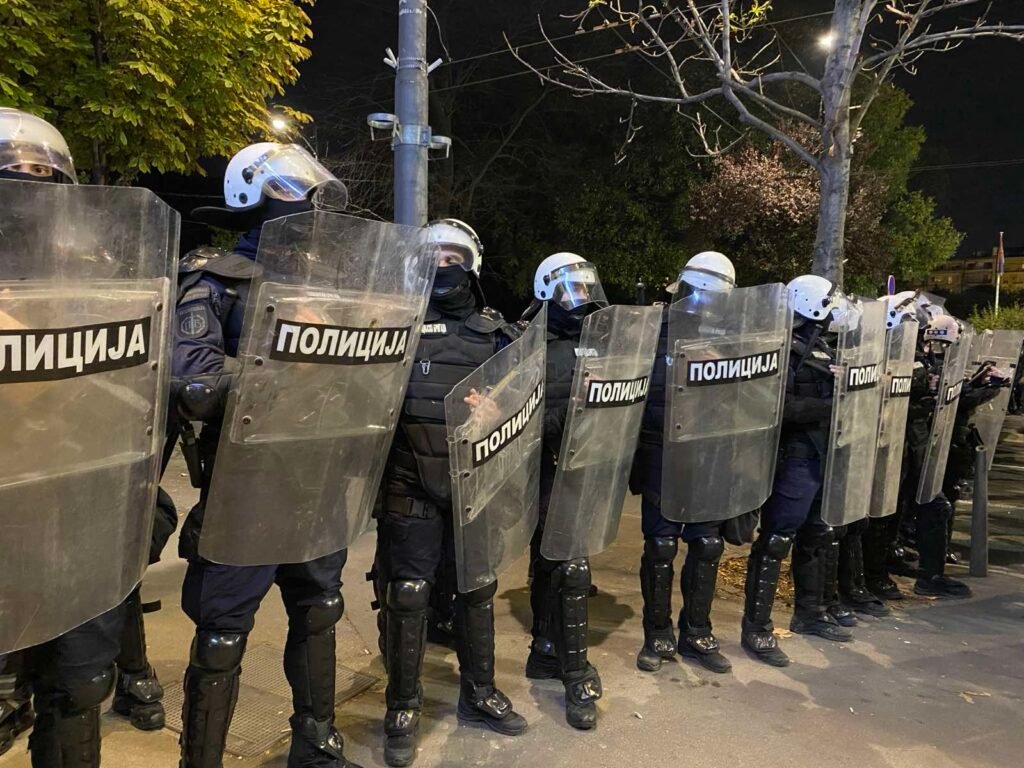
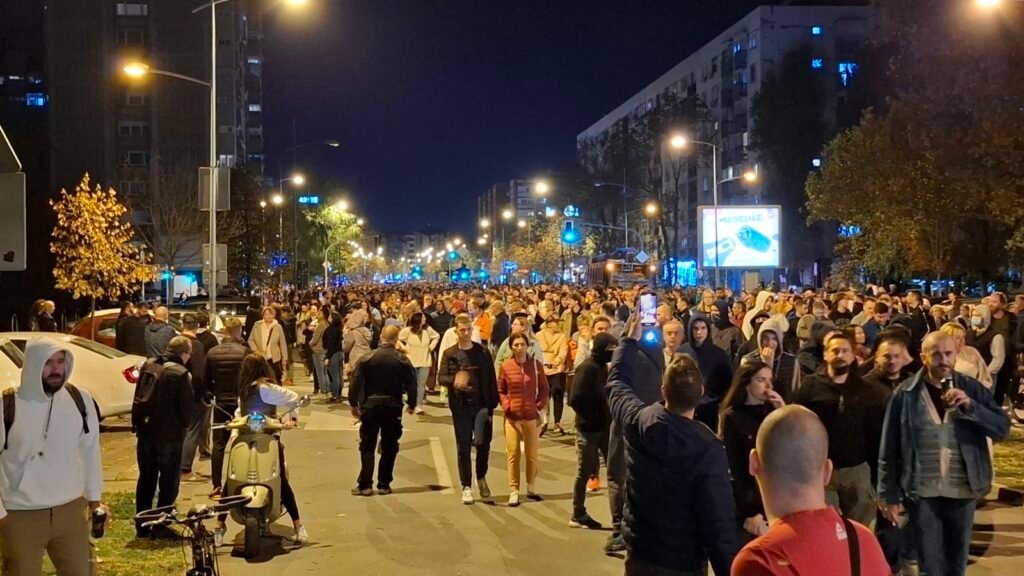
Meanwhile, citizens chanting “Dijana, Dijana!” and “Vučić, thief!” were pushed back by police brigades onto Knez Miloš Boulevard. Among those suppressed by force was former basketball player Vladimir Štimac, captured on footage being shoved by riot police.
The contrast was glaring: while government supporters freely entered the fenced area, citizens backing Hrka were blocked, detained, or physically restrained. This clear double standard once again highlighted the state’s use of police as a political instrument rather than a public service.
Voices of Resistance Across Serbia
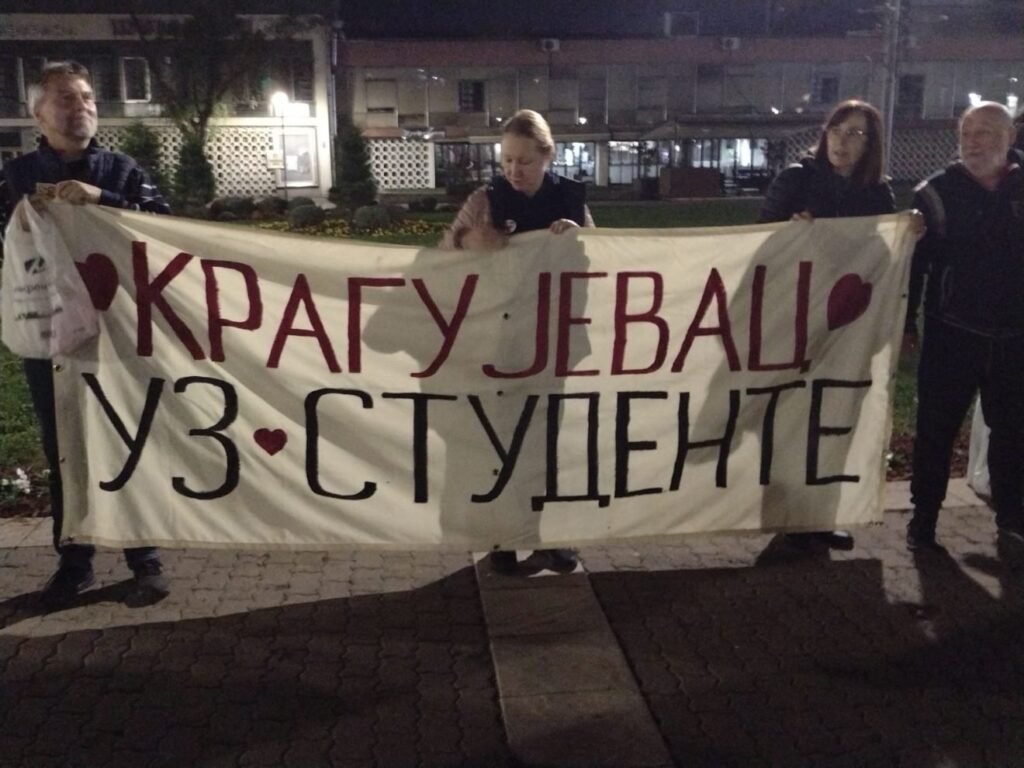
The protests spread beyond Belgrade. In Novi Sad, demonstrators gathered in front of the BIA offices, leaving bloody handprints on the building’s walls to symbolize government guilt for the deaths of sixteen people. In Kragujevac, students who had marched for weeks were welcomed with applause and banners reading “Students did not betray Serbia like Vučić.” Citizens in Subotica, Vrbas, and Sremska Mitrovica also rallied in spontaneous demonstrations of solidarity.
Professor Dr. Dragan Stojković from the University of Kragujevac thanked the students for “waking up Serbia” and for proving that the tragedy in Novi Sad “was not caused by gravity, but by greed, corruption, and government negligence.”
Arbitrary Detentions and Intimidation
Reports from N1 confirmed that driver Milomir Jaćimović, who had brought demonstrators to Belgrade, was detained by police, and three students from Niš — Milan, David, and Irina — were temporarily held against their will before being released. Such actions have been condemned by civic groups as attempts to intimidate and silence dissent.
A Nation Rising Against Fear
As the night progressed, chants of “We want elections!” and “Get ready, Chetniks!” echoed through Belgrade’s blocked boulevards. Protesters continued to call for justice and systemic change, while government-aligned media remained largely silent about the police bias and violence incited by SNS supporters.
Dijana Hrka, visibly exhausted but resolute, addressed the crowd through a megaphone, thanking citizens for their support and revealing that foreign media were monitoring the unfolding situation.
Her hunger strike has become a symbol of defiance in a country where state power, corruption, and repression have suffocated public accountability.
Conclusion
The violent scenes in front of Serbia’s Parliament exposed once again the deep rot within the institutions of state power — where the police serve political masters instead of citizens, and justice remains hostage to a corrupt regime.
Despite intimidation, arrests, and orchestrated provocations, Serbia’s citizens continue to rise, united by the same demand voiced across the nation’s streets:
Truth, justice, and an end to Vučić’s rule of fear.