A year after a night of unprecedented violence in Valjevo, Serbia, two parallel legal processes are still underway — one involving protesters accused of attacking police officers and another concerning allegations of excessive police force against demonstrators.
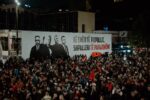
The violence erupted on the night of August 14–15, 2025, following a peaceful gathering in support of local resident Vladimir Mihailović, whose family had been attacked the previous evening when masked men reportedly stormed his café. Mihailović suffered serious injuries, while his wife, mother and children also required medical attention. No one has so far been held accountable for that attack, according to N1.
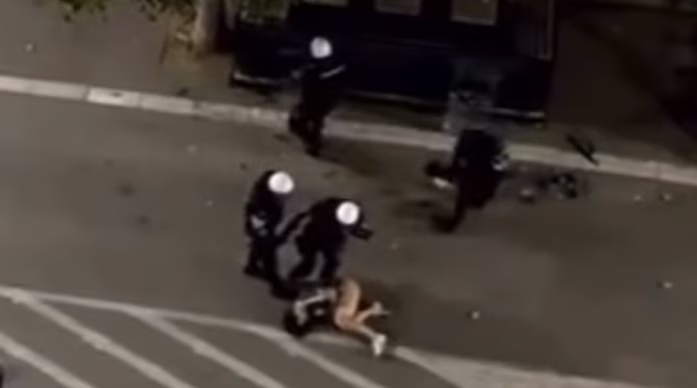
The protest initially remained peaceful, but tensions escalated after police began pushing demonstrators back. Tear gas was deployed, and clashes followed, with videos showing officers beating protesters, including minors.
One widely circulated recording showed several police officers surrounding a teenager who was lying on the ground and apparently offering no resistance before kicking and striking him with batons. The boy was 15 at the time.
According to official figures from the Valjevo Health Center, 43 civilians and 21 Interior Ministry personnel sought medical assistance during the events of August 14 and 15, 2025. Three civilians were hospitalized, while another was transferred to the University Clinical Center of Serbia in Belgrade because of the severity of his injuries. One member of the Ministry of Defense was also hospitalized, while no police officer was admitted for inpatient treatment.
The figures contrast with claims circulated by pro-government local media that 75 police officers had been injured.
The Health Center also said it had no record of medical assistance being denied to either police officers or civilians.
Twenty-seven people who were allegedly beaten during the protests were represented by lawyers who filed criminal complaints against 28 police officers, including senior officials from the Valjevo Police Directorate and officers from several other police departments.
The case concerning alleged police brutality remained with the Basic Public Prosecutor’s Office in Valjevo for months before the Organized Crime Prosecutor’s Office took over the investigation in May 2026, following a request for extraordinary oversight by lawyers representing the alleged victims.
At the same time, the Basic Public Prosecutor’s Office in Valjevo is conducting separate proceedings against 34 people over alleged attacks on police officers during the events.
The anniversary has also renewed scrutiny of the role of police units brought in from other parts of Serbia. Video footage from the night appears to show officers being directed into different positions, with references to units from Užice, Priboj and Prijepolje.
Local residents and activists subsequently attempted to identify officers whom they accused of participating in the beatings. They also called for the removal of Valjevo Police Directorate chief Vladan Jerinić, but the Interior Ministry did not act on the demand.
The violence did not end on August 14. The following night, masked attackers reportedly stormed a workshop owned by the father of student Tamara Jeremić, who had herself been beaten during the previous night’s protest. Another man was seriously injured and later transferred to Belgrade for treatment.
A café was also reportedly vandalized that evening, with its owner alleging that a female employee was assaulted because of her support for the student movement.
Further unrest followed on August 16, when masked individuals vandalized the local offices of the Serbian Progressive Party (SNS) and damaged municipal and prosecution buildings. Police again used tear gas and deployed the Gendarmerie.
The events have remained politically contentious. President Aleksandar Vučić defended the police response, describing officers as patient and saying he would always stand behind Serbian police officers.
For many Valjevo residents, however, the images of officers beating demonstrators — including minors — have become a symbol of the unresolved questions surrounding police accountability in Serbia.
A year later, the central question remains whether those accused of using excessive force will be held accountable, while protesters and others accused of violence continue to face legal proceedings.