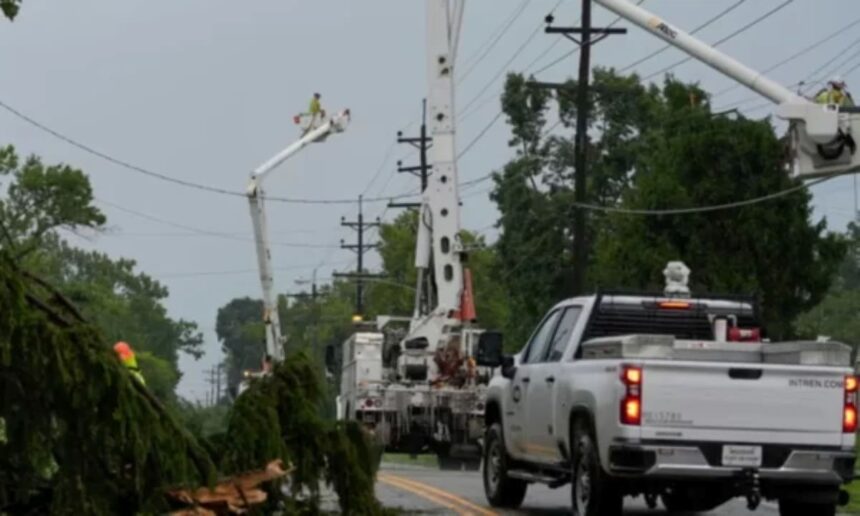
A powerful storm system swept across the central United States on Thursday, bringing damaging winds, tornadoes, intense rainfall and flash flooding that left around 540,000 homes and businesses without electricity and resulted in several deaths, including a four-year-old child.
Indiana was the hardest-hit state, with more than 267,000 power outages reported. According to PowerOutage.us, hundreds of thousands of customers across several Midwestern states were affected as emergency crews and utility companies worked to restore electricity.
AccuWeather forecasters warned that additional rounds of severe storms could move across the Midwest and eastern United States, bringing strong winds and repeated heavy rainfall that could trigger further dangerous flooding.
In Indiana, more than 267,000 outages represented roughly 8% of the state’s approximately 3.3 million electricity customers.
Northern Indiana Public Service Company, or NIPSCO, was among the utilities most severely affected. At one point, about 258,885 homes and businesses — approximately 55% of its customers — were without power.
The company said damage to its network was widespread, involving utility poles, power lines and fallen trees. In some areas, restoration could take several days because of the extent of the damage.
The storms have also caused fatalities.
A four-year-old boy was killed in Geneva, Indiana, after a tree fell onto a home during Tuesday’s storms.
In Ohio, Governor Mike DeWine said a Roseville resident died during a medical emergency after first responders were unable to reach the person in time because roads were flooded.
Authorities in Portage, Indiana, meanwhile, were investigating whether severe weather contributed to a reported explosion at a residence where one person was killed.
Emergency crews in Ohio and western Pennsylvania carried out multiple water rescues as floodwaters inundated roads and communities. Teams also worked to clear streets of fallen trees and downed power lines.
Forecasters warned that the combination of saturated ground, additional rainfall and strong winds could prolong hazardous conditions across parts of the region.